
Opinions
The Night Ghana Remembered How to Believe
Judith Mensah-Amoah•
Opinions, Research, Data, Articles on Ghana
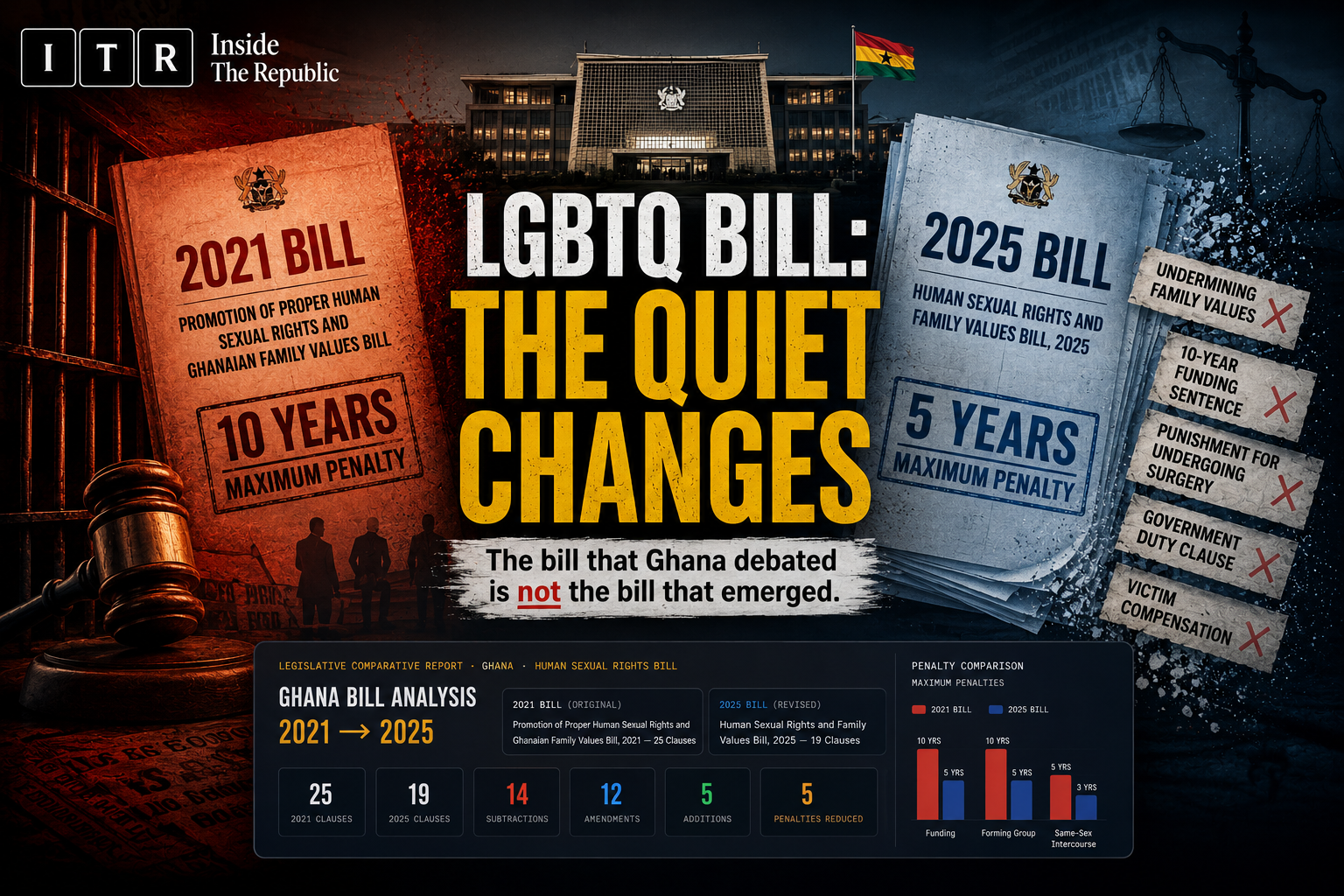
“The 2021 bill came with ten years and a clause that could silence a journalist. The 2025 bill arrives with half the time and none of the teeth.”
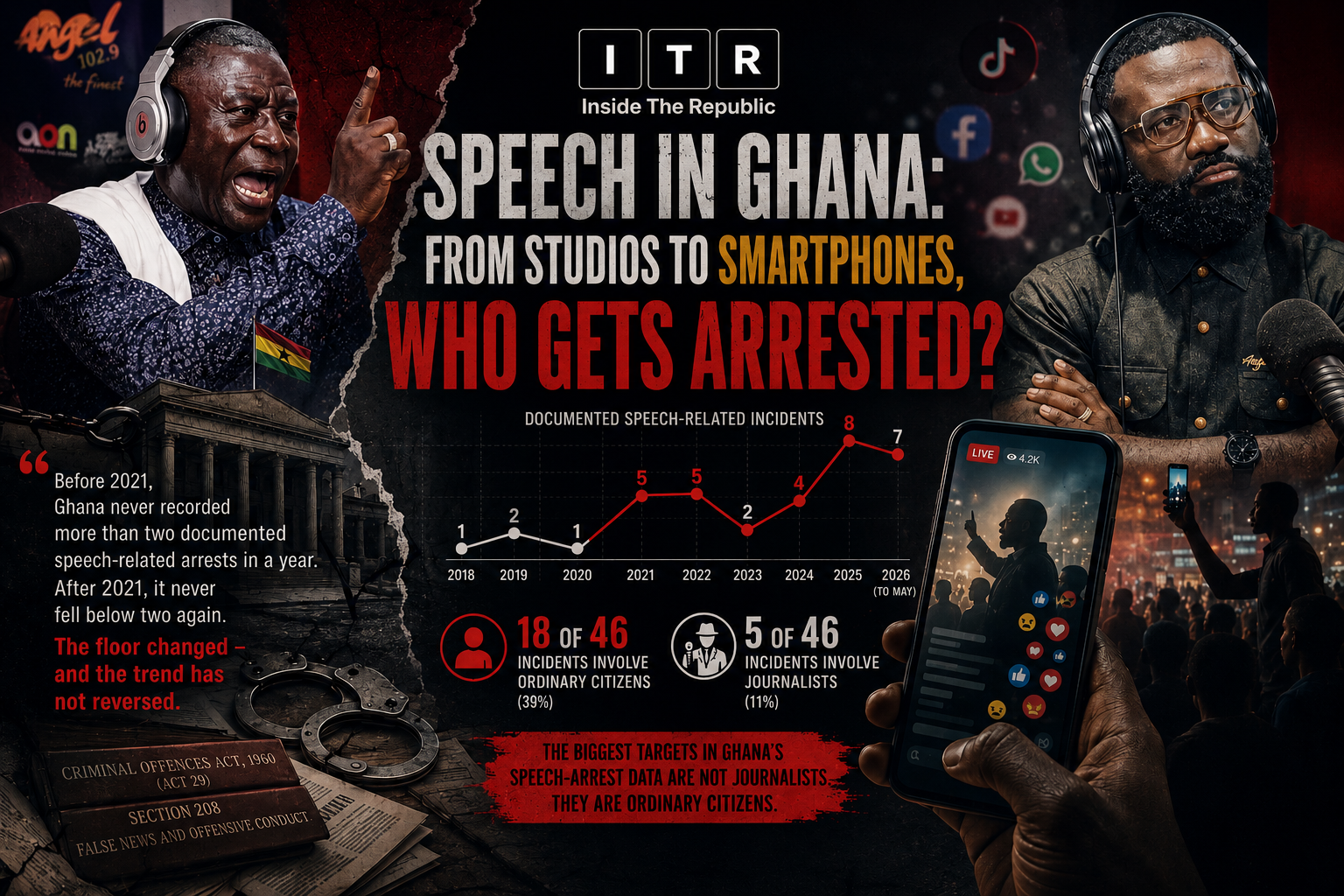
“Before 2021, Ghana never recorded more than two documented speech-related arrests in a year. After 2021, it never fell below two again. The biggest targets in Ghana’s speech-arrest data are not journalists. They are ordinary citizens.”
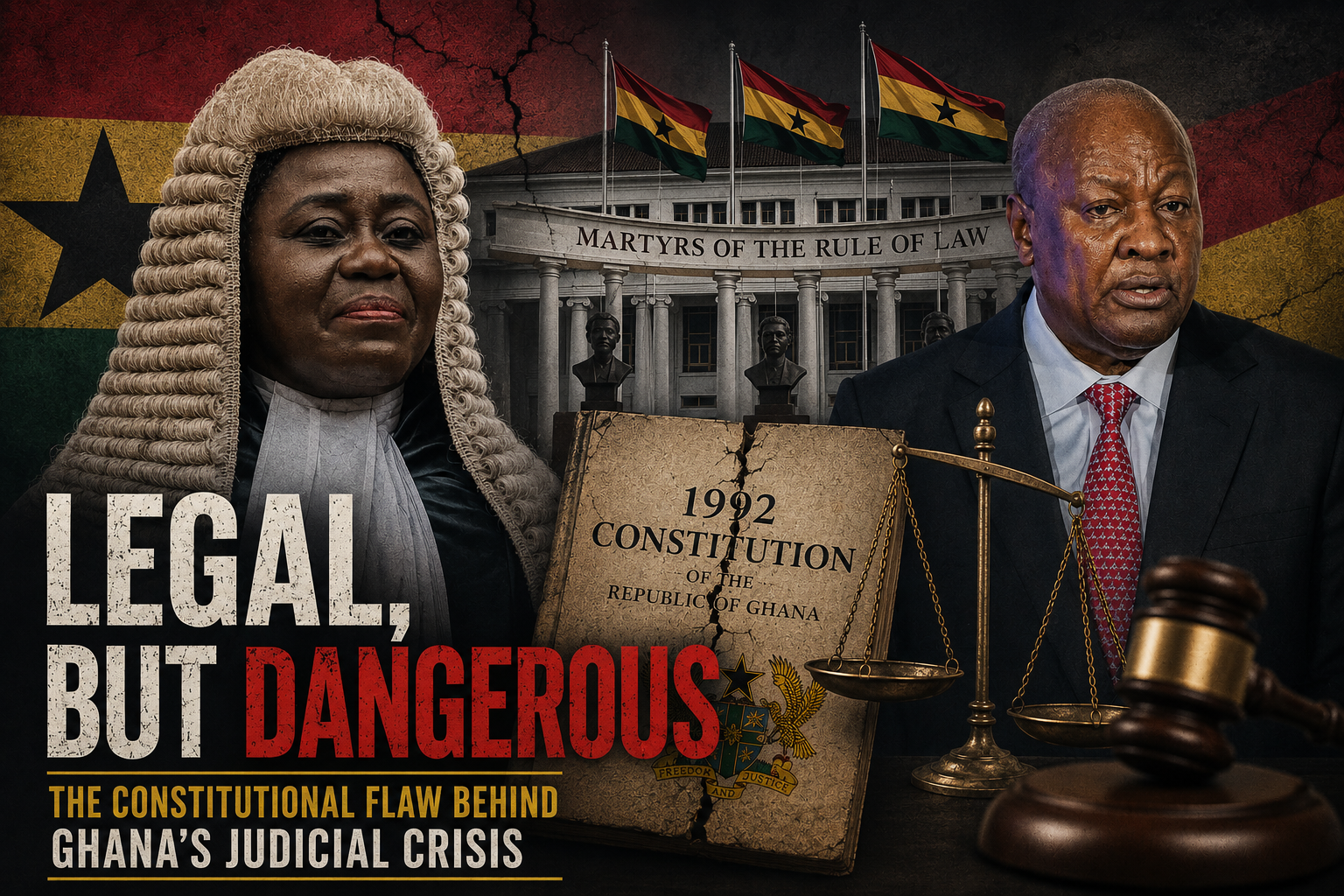
The article argues that Ghana’s suspension of Chief Justice Gertrude Torkornoo was legally valid but exposed a deeper flaw in the 1992 Constitution. The writer says the real problem is not John Dramani Mahama or the Chief Justice herself, but a constitutional system that gives excessive power to the President while weakening institutional checks and balances. According to the piece, Article 146 allows the Executive to dominate judicial discipline with little transparency or restraint, making judicial independence vulnerable. The author argues that Ghana’s democracy prioritizes executive control over true accountability, leaving institutions like Parliament and the judiciary structurally weak. The central warning is that legality alone does not guarantee democratic legitimacy. Even when procedures are followed, the Constitution can still enable authoritarian-style outcomes if too much power is concentrated in one office.
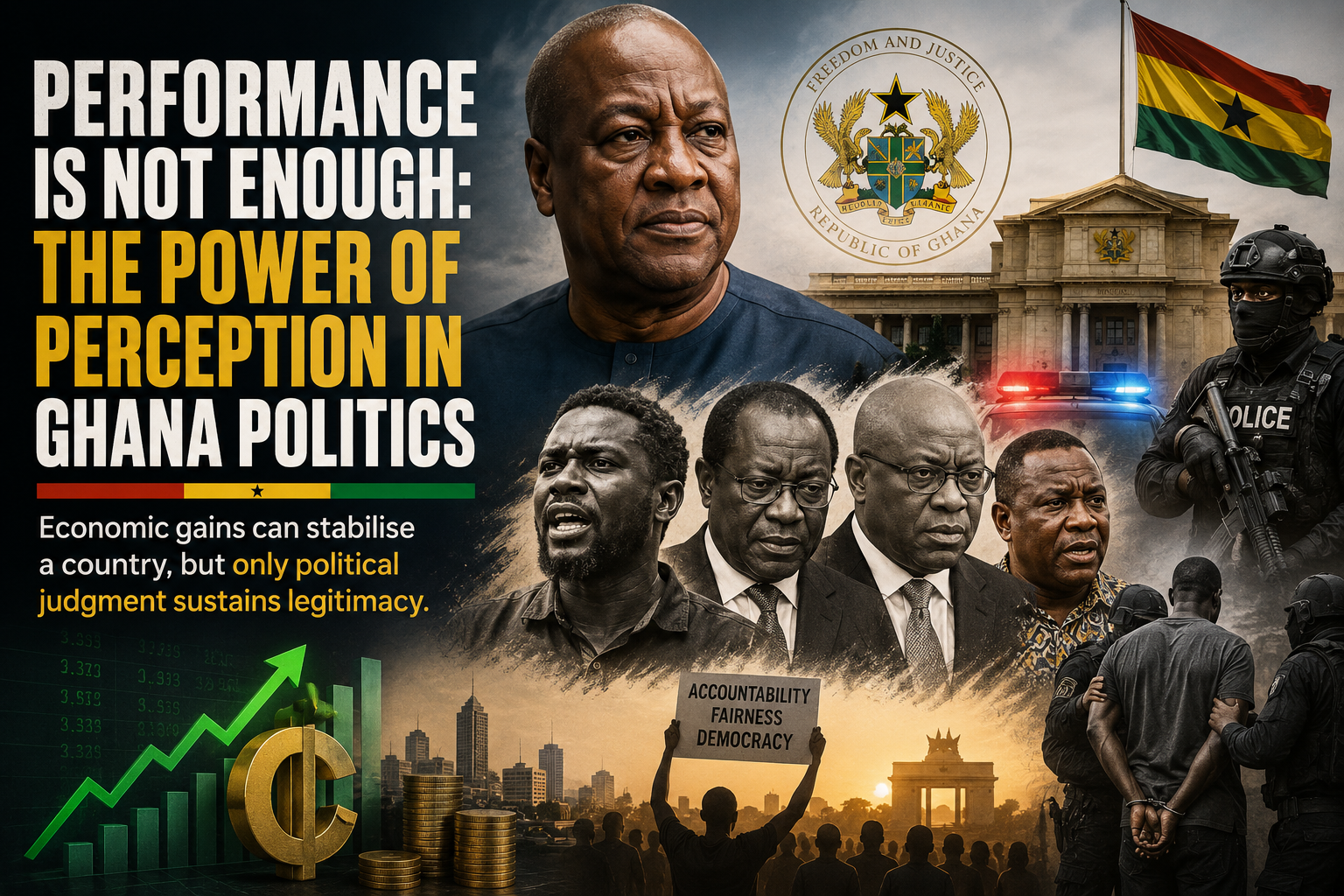
The article argues that although the John Dramani Mahama government has improved Ghana’s economy, its biggest risk is poor political optics. Arrests and raids involving opposition figures create a public perception of intimidation and abuse of power, even if legally justified. The writer warns that in democracy, perception matters as much as performance, and urges the government to govern with restraint, fairness, and accountability.